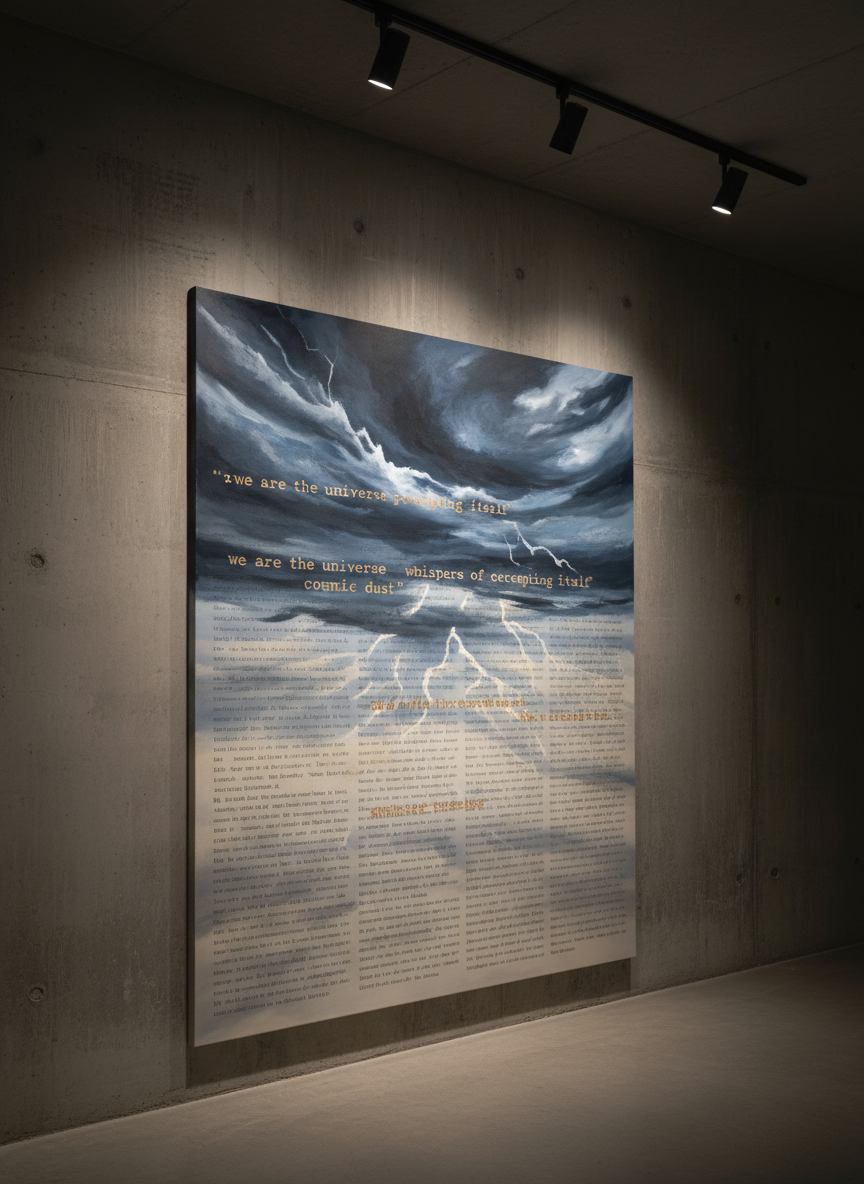
Inside a dim, minimalist gallery space, a single large canvas leans against a concrete wall, captured in photographic realism. The painting is an abstract fusion of text and imagery: ghostly, overlapping paragraphs in faint typewriter gray emerge beneath translucent layers of oil paint depicting a storm-swept prairie sky. Scratches of white paint cut through deep indigo clouds, while fragments of legible phrases—"we are the universe perceiving itself"—glow subtly in warm sepia. Overhead track lighting casts focused, warm beams onto the canvas, leaving the surrounding walls in cool shadow. Shot from a slightly low, three-quarter angle, the composition emphasizes the height and presence of the artwork, evoking a sophisticated, introspective atmosphere where literature and visual art coexist in a single, enigmatic piece.

Arts+Letters

Stories and images from Edmonton’s northern light to imagined worlds at the edge of everything.

About

I’m Dook, an Edmonton writer and visual artist, weaving prairie light, cosmic wonder, and end‑of‑the‑world quiet into stories and images that ask what it means to be the universe noticing itself.
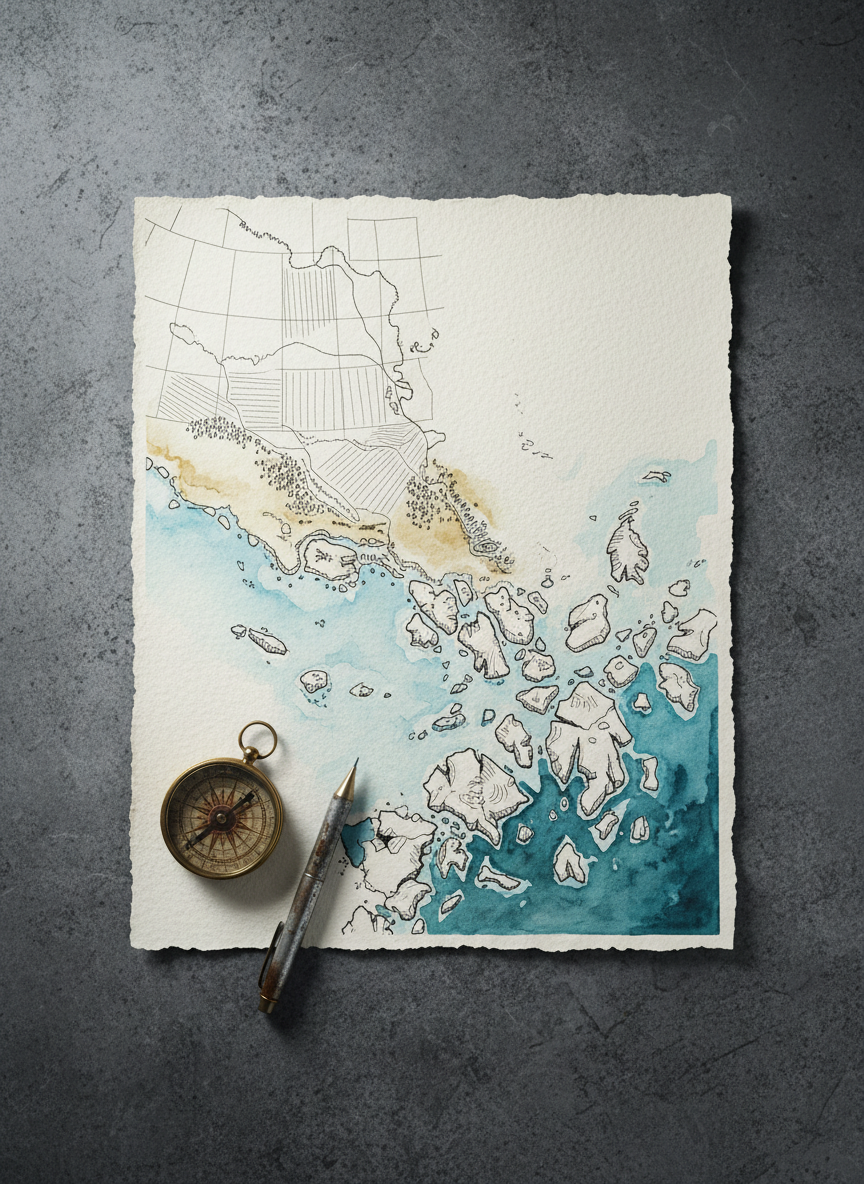
On a heavy, slate-gray tabletop, a single sheet of thick, deckle-edged paper lies centered, bearing a minimalist, hand-drawn map of the northern Canadian prairies transitioning into a fragmented, otherworldly coastline. Fine black ink lines fade into watercolor washes of icy blue, muted ochre, and deep, inky teal, suggesting a journey from familiar fields to the end of the world and beyond. A small, antique brass compass and a stubby, well-used mechanical pencil rest near the lower edge. Cool, soft directional light from the upper right creates delicate highlights along the textured paper and subtle shadows under the objects. The photograph is composed with generous negative space and a shallow depth of field, creating a contemplative, sophisticated mood that implies narrative exploration.
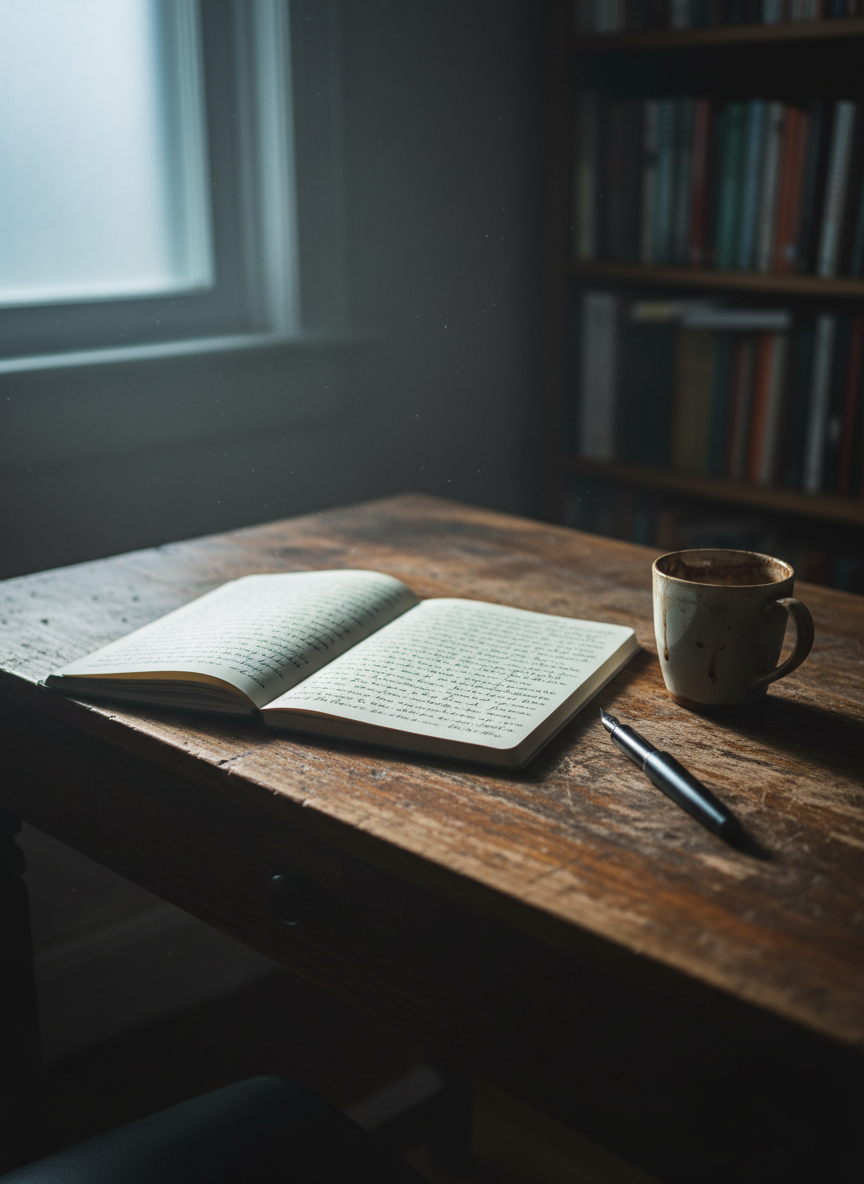
A weathered wooden writing desk stands alone in a dim, book-lined study, its grain rich with amber and charcoal tones. An open, cream-colored notebook filled with dense handwritten lines rests beside a heavy, matte-black fountain pen and a chipped ceramic mug stained by years of coffee. Soft, cool northern evening light filters through a frosted window, catching dust motes and creating a luminous haze above the desk. Shadows pool in the corners, lending a contemplative, almost sacred stillness. Photographic realism, shot at eye level with a shallow depth of field, keeps the notebook in razor-sharp focus while shelves of blurred, colorful spines melt into the background, emphasizing solitude, craft, and the quiet intensity of writing.

“Dook’s work feels like prairie starlight on paper—intimate, uncanny, and impossible to stop thinking about.”

— Aya Nakamura
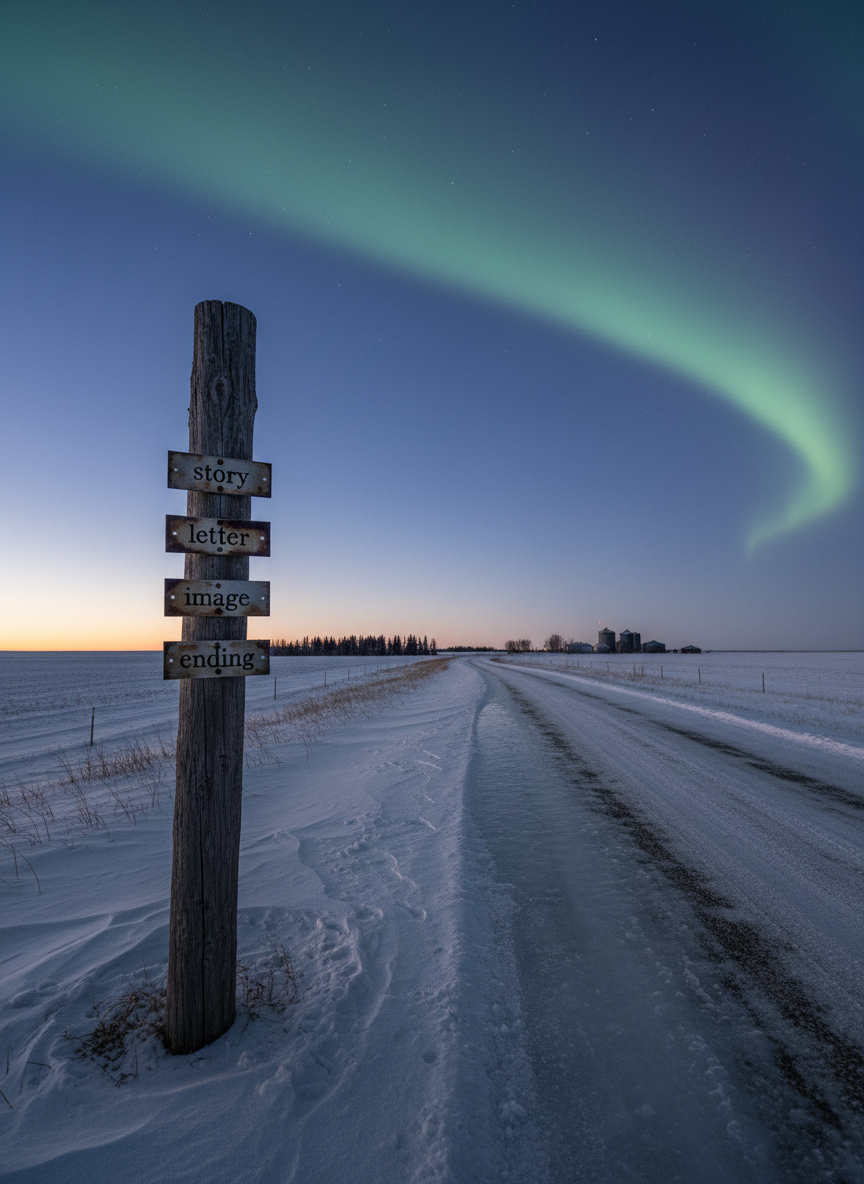
A sprawling, snow-dusted prairie under a vast, twilight sky stretches to the horizon, captured in photographic realism. In the foreground, a solitary, rough-hewn wooden signpost bears small metal plaques engraved with single words—"story," "letter," "image," and "ending"—each weathered and slightly tarnished. Indigo and violet hues wash over distant grain silos and low, shadowy tree lines. A pale aurora begins to shimmer faintly overhead, its light reflecting in a thin layer of ice along a gravel road that snakes away. The low-angle, wide-lens composition emphasizes scale and isolation, while the cold, clean atmosphere feels both stark and quietly mystical, echoing northern Canadian narratives that reach toward the end of the world and beyond.
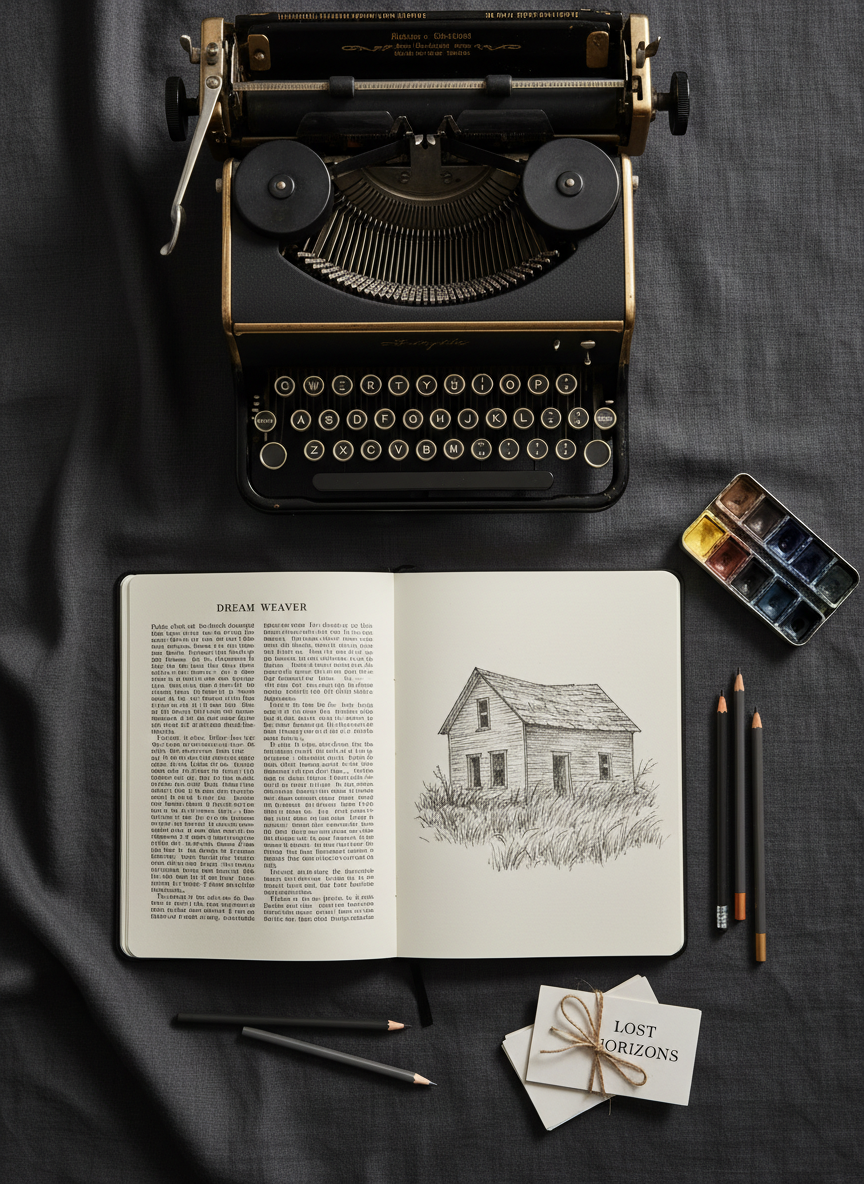
A meticulously arranged flat lay of creative tools occupies a dark charcoal linen backdrop in photographic realism. A vintage, brass-trimmed typewriter with matte black keys anchors the upper edge, while a sketchbook lies open below, displaying one page of tight, typed text and the facing page filled with a detailed graphite illustration of a crumbling prairie farmhouse. Scattered around are sharpened charcoal sticks, muted gouache pans, and neatly stacked index cards labeled with short, enigmatic titles. Soft, diffused overcast light from the left creates gentle gradients on the metal surfaces and deep, velvety shadows in the fabric folds. Shot from a bird’s-eye view, the composition is balanced but slightly asymmetrical, evoking a sophisticated, disciplined workspace where writing and visual art merge seamlessly.
Inside a dim, minimalist gallery space, a single large canvas leans against a concrete wall, captured in photographic realism. The painting is an abstract fusion of text and imagery: ghostly, overlapping paragraphs in faint typewriter gray emerge beneath translucent layers of oil paint depicting a storm-swept prairie sky. Scratches of white paint cut through deep indigo clouds, while fragments of legible phrases—"we are the universe perceiving itself"—glow subtly in warm sepia. Overhead track lighting casts focused, warm beams onto the canvas, leaving the surrounding walls in cool shadow. Shot from a slightly low, three-quarter angle, the composition emphasizes the height and presence of the artwork, evoking a sophisticated, introspective atmosphere where literature and visual art coexist in a single, enigmatic piece.
Is this your new site? Log in to activate admin features and dismiss this message
Log In